
Arabic and English business cards in the UAE: how to get bilingual right
Why bilingual business cards matter in the UAE, what to translate and what to keep the same, the etiquette of handing one over, and how a digital card handles two languages.
By Wesley Sing, Founder of Newbi5 min read
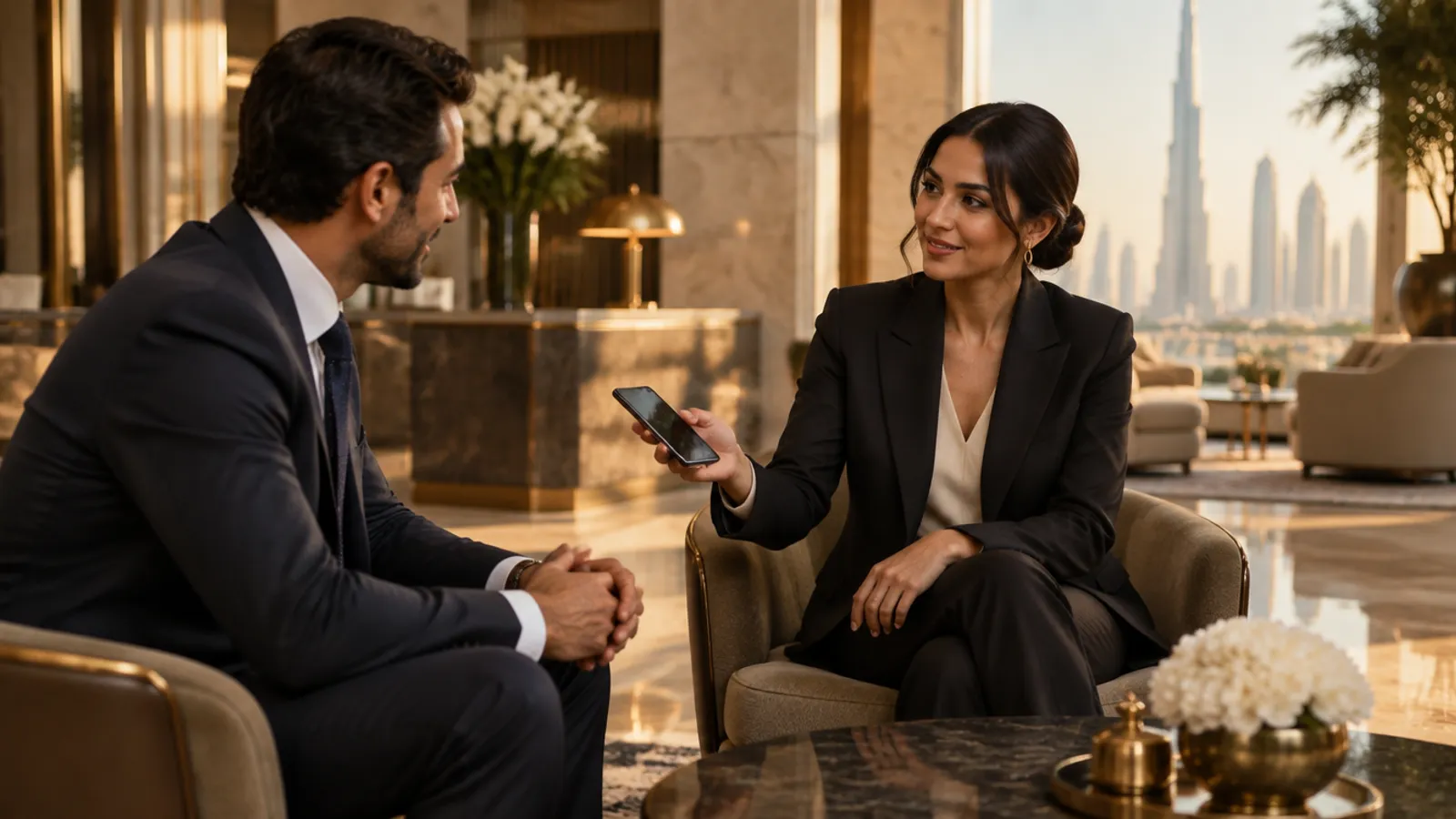
In the UAE, a business card often has two faces: English on one side, Arabic on the other. English is the everyday language of business across the Emirates, but Arabic is the official language, and the language of government, of many family-owned companies and of a lot of your clients. A card that speaks both says you take the market seriously. A card that gets the Arabic wrong says the opposite, loudly.
This guide covers how to do bilingual well, on paper and on your phone.
Why bilingual matters here
- It shows respect. Many Emirati and Arab clients are fluent in English and will never ask for Arabic. Offering it anyway is noticed.
- It helps the people who handle your details. Assistants, procurement teams and government counters often work in Arabic. A name they can read is a name they can file correctly.
- It matches the documents. Trade licences, visas and contracts carry names in both scripts. Your card should agree with them.
What to translate, and what to keep the same
Your name: transliterate once, and stick to it
Arabic names written in English have many spellings: Mohammed, Muhammad, Mohamed. Non-Arabic names written in Arabic have the same problem in reverse. Pick one spelling in each script, ideally the one on your passport or Emirates ID, and use exactly that everywhere: card, email signature, LinkedIn and contracts.
Your company name: match the trade licence
Your licensed company name usually has an official Arabic version. Use it word for word, rather than translating your English name yourself.
Your title: translate the meaning, not the words
"Head of Growth" translated word by word can read oddly in Arabic. Ask a native speaker what a person in your role would be called in an Arabic-speaking company, and use that.
Numbers, email and web addresses: keep them in Latin characters
Write phone numbers in international format, +971 5X XXX XXXX, using the digits everyone's phone dials. Email and web addresses stay in Latin characters on both sides.
Pay for a human translation
Machine translation has improved, but it still gets titles, word order and right-to-left layout wrong in ways a native reader spots instantly. A professional translator costs little next to a box of reprinted cards, or a first impression with a typo in it.
The etiquette of handing over a card
Customs vary between people, but a few habits are always safe in the UAE:
- Offer and receive cards with your right hand, or with both hands.
- Turn the card so the side in the other person's language faces them.
- Take a moment to read a card you are given before putting it away, rather than pocketing it straight away.
- Do not write on someone's card in front of them.
How a digital card handles two languages
More and more introductions in the UAE happen on a phone: a QR code at a meeting, a link on WhatsApp, a pass in Apple Wallet. A digital card raises a question that paper never did: whose language does it open in?
It helps to separate two things:
- The card's own interface: the buttons, menus, booking calendar and forms. A good digital card can show these in Arabic, laid out right to left, or in English, depending on who is reading.
- Your own words: your name, title and description. A card shows these exactly as you wrote them; it does not translate them for you.
So the practical advice for a bilingual card is:
- Write your name in both scripts in the way you chose above, for example "Faisal Rahman · فيصل رحمن".
- Keep the rest of your text short and clear in one language, usually English, so it reads cleanly on any screen.
- Share the Arabic version of your card with Arabic-speaking contacts, so everything around your details is in their language too.
One more thing for the UAE: add a phone number, not just WhatsApp
WhatsApp messages work normally in the UAE, and most people would rather send one than call. But WhatsApp voice and video calls have long been blocked in the country, and they remain unavailable as of 2026. Put a normal mobile number on your card next to the WhatsApp button, so people who want to talk can call you.
Where Newbi fits
Newbi was built with Arabic as one of its own languages, not an afterthought. Every Newbi card can be opened in Arabic or in English. In Arabic, the whole card, including buttons, booking and forms, is laid out right to left. Visitors whose phone is set to Arabic are offered the Arabic version, and you can send the Arabic link yourself. Your prices show in dirhams, and on the Pro plan the card adds an Apple Wallet or Google Wallet pass, so your QR code is a second away at any meeting.
Newbi does not translate what you write. Your name, title and description appear as you entered them, so the advice above still applies.
To see the difference, open the same made-up example card in English and in Arabic. Plans start at AED 19 a month, and you can try the Pro plan free for 14 days.
Quick answers
Do I need an Arabic business card in Dubai? It is not required, and English works for most business. But a bilingual card is widely appreciated, especially with government, family businesses and Arabic-speaking clients.
Which side should face up when I hand over a bilingual card? The side in the other person's language.
Should I use Arabic numerals on my card? Write phone numbers in the international format with the digits phones use, +971 followed by the number. They are readable by everyone and work with every phone.